
Generational Storytelling IV
The Archetypes in the First Star Wars Trilogy

For the sake of those pour souls who never saw the first Star Wars movie (Episode IV: A New Hope) or simply won’t watch it because of the outdated effects or whatever, I’m gonna mention stuff that is old news to most of us. I’m not trying to insult anybody’s intelligence—bear with me and I’ll also give you some info you likely haven’t encountered before.
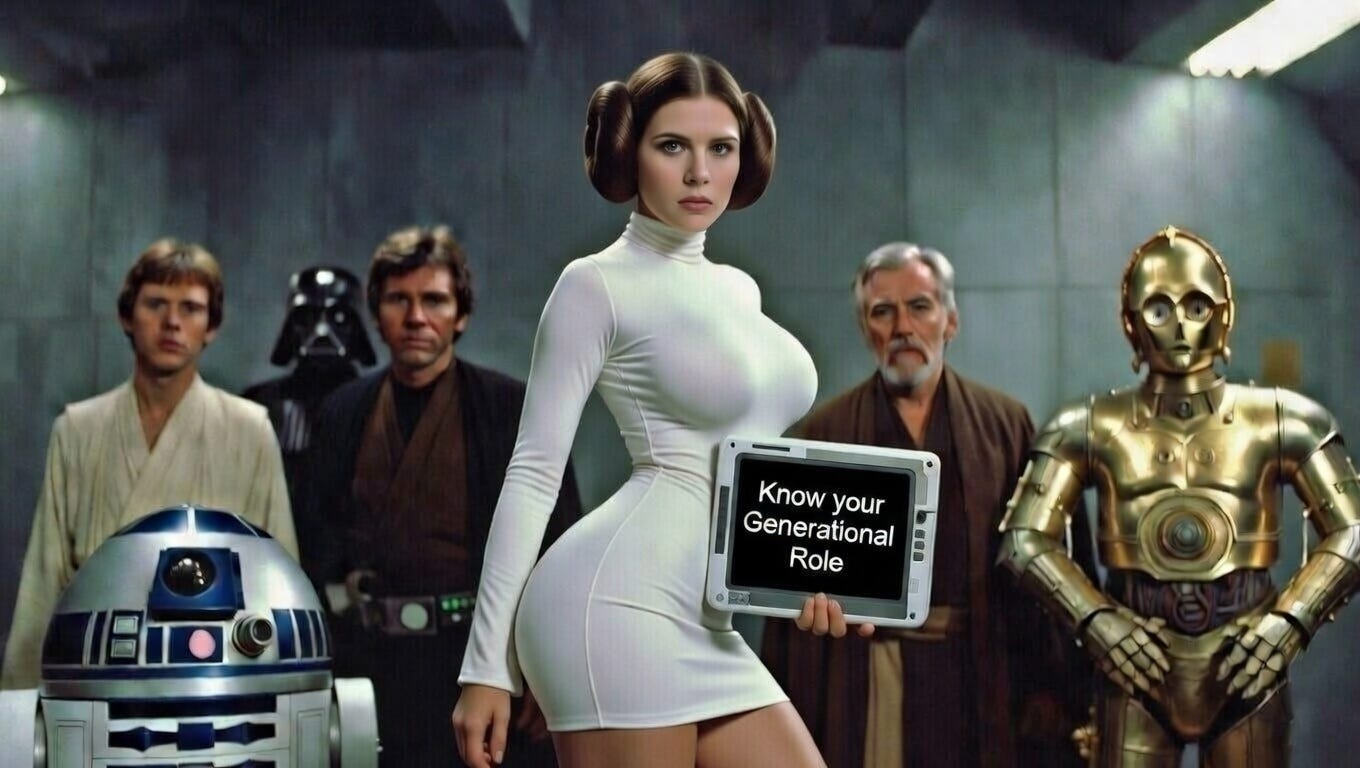
I mentioned the four archetypes from Generational Theory last time. All four are represented in this one story. The archetypes play very familiar roles in this film—they’ve played these roles in stories for centuries, perhaps millennia. However, this traditional portrayal of the archetypes, and the dynamic between them, was lost after the conclusion of the original trilogy. (And I have no interest to study the subsequent cinematic efforts to analyze what the archetypal dynamics are in them…if they have any.)
Blockbuster of a Lifetime
The original Star Wars was held over in theaters for over a year (which is the only reason I ever got to see it on the big screen). In ticket sale numbers, It was probably as big, or bigger, than Birth of a Nation and Gone With the Wind. Titanic and other blockbusters we could name probably grossed more due to inflation and ticket prices outclimbing the inflation rates, but I doubt their debut success was even in the same league. So for an enormous majority of the population alive in 1977, the first trilogy, and New Hope in particular, is deeply ingrained in our cultural consciousness. There may be 1977 reasons why it appealed to so many people, but I believe the character synthesis, derived from real-life archetypal dynamics, is one of the reasons it resonated with so many of us.
Generational Theory had not been developed yet, and I would guess George Lucas and his co-writers are still ignorant of it. So the observations I’m making are not part of an assumption that Star Wars’ adherence to this framework was intentional.
The Galaxy was in a Fourth Turning
“A long time ago…” The film itself overtly proclaims itself as something historic…the retelling of an age-old story. But that truth goes much deeper than the filmmakers would consciously admit to, or even understand.
From the opening title crawl (borrowed from classic sci-fi serials like Flash Gordon) it’s obvious that this galaxy far, far away is undergoing what Strauss and Howe call a Secular Crisis. With the Jedi involved as they are, it’s not exactly secular; but it is existential. The Senate is dissolved; “the last remnants of the old republic have been swept away”; the Rebel Alliance is on the ropes; and the Empire is destroying entire planets with its new, horrific weapon: the Death Star.
The cycle of the four turnings each saeculum is a nearly perfect magnification of the cycle of the four seasons in a year. The Fourth Turning correlates to the winter. It’s a season of death. The weather typically goes beyond simply uncomfortable, to brutally cold. The trees are bare; the grass and flowers are dead. Animals are hibernating. It takes a degree of planning and sacrifice to survive. Often it takes cooperation with others. All of that is reflected in the Secular Crisis. Economically and politically, times have gotten so difficult that there is no fixing it without substantial sacrifice, dirty work, and collective effort. Longstanding institutions are dead or dying. National unity is either dead or in hibernation after a long decline. In every single Fourth Turning America has gone through, there has been war.
Total war.
Whatever the most horrific weapon at our disposal is, it gets deployed.
A Secular Crisis also requires “greater and greater levels of civic effort,” as Neil Howe has said. In other words: rejection of individualism. We all have to huddle together under the same blanket to survive the cold. Face the wolves together. Tie our life rafts together. Strength in numbers, and all that.
Here’s a pattern I’ve noted, that Strauss and Howe have not mentioned, to my knowledge:
America’s 4th Turning War Enemies
External (the British)
Internal (the Slave States)
External (the Axis)
Internal?
It certainly appears it will be internal again this time. But then, as we look at foreign policy of late, it might very well be both internal and external.
In Lucas’ universe, the conflict was referred to as “a civil war,” but looked very much like an external total war between the Empire and the Rebel Alliance. (Even as a young boy, I recognized it as a WWII movie with science fiction trappings. It was more than that, of course, but it definitely was that, too.) Conflation of the Empire with Nazi Germany is not coincidental. There are also some allusions to the Roman Empire and Fascist Italy as well.
The Hero
As you’ll see with all the characters, Luke Skywalker’s individual personality fits perfectly the peer personality of his archetype (whereas this rarely happens with real life individuals in a given generation).
Even though Luke is isolated on a farm with his aunt and uncle, he is collegial in nature. He wants to hang out with friends instead of clean the new droids. He can’t wait to leave the farm and enter the academy so he can join the rebellion against the Empire.
Note: he is of military age just in time to participate in the resolution of the Crisis, as “Hero” generations are, every saeculum. Yet even though he wants to do his part in the war effort, he initially rejects Kenobi’s offer to make him a Jedi (his call to adventure) because he feels responsible to do his part on the farm, for his family.
Uncle Owen takes advantage of his obligation to do his part for his family, to check Luke’s conviction to do his part for the Rebel Alliance.
Luke’s most scathing criticism of anybody will be directed at Han Solo later, because the smuggler is more interested in his own profit than in doing his part in the war effort against the Empire.
On the Death Star, surrounded by the enemy and in danger of capture at any moment, his optimism and confidence never falter.
Later during the briefing for the attack on the Death Star, when other pilots dwell on how difficult the target will be to hit, Luke insists that it can be done.
Luke enthusiastically follows anyone placed in authority over him. Once his aunt and uncle are dead, he transitions to following Obi Wan’s leadership. Once Kenobi is gone, he transitions to obeying his squadron leader. Later (Episode V: “The Empire Strikes Back”) he becomes Yoda’s disciple. By Episode VI, he is a veteran warrior and ready to assume leadership himself.
The Prophet
George Lucas is a Boomer. Considering the narcissism of his g-g-g-generation, it’s no surprise that the two most powerful characters in the story are projections of what he (perhaps subconsciously) recognized in himself.
Prophet generations are unusually “spiritual,” and the Boom definitely has this quality in spades. This is why so many of them dabbled in Eastern religions and “mind-expanding” drugs in their quest for Nirvana. From those who didn’t abandon Christianity came the “Jesus freaks.”
In Star Wars, spirituality is represented by the Force, which has light and dark sides. This supplants the dichotomy of God and Satan; good and evil—even though the term “evil” is actually used a couple times in the movie.
Quick note: this idea of “a force” with light and dark sides is a New Age concept and should not be conflated with Christianity. George Lucas became a New Ager (whether he calls it by that name or some other) after a car accident when he beheld the “energy field created by all living things” (as Obi-Wan explains).
The Dark Prophet
Representing the dark side is Darth Vader. “Vader” is the German word for “father.” DV doesn’t just represent the dark side of the self that a Jedi has to conquer (as in The Empire Strike Back), but also Lucas’ own father (GI Generation–the “uncool,” “unfeeling,” older generation “lacking consciousness” that the Boomers rebelled against).
Though on the dark side, Vader is very spiritual. He feels a “tremor in the Force” and can use its power to his advantage.
Prophets are very inward-focused. Vader has lost the struggle between light and dark within himself—meaning Obi-Wan was not lying, but only stretching the truth when he told Luke that Vader had “betrayed and murdered” Luke’s father.
The Prophet of Light
Obi-Wan Kenobi is a sort of self-insert for the Boomer (Prophet) film-maker. Of the positive characters, he is the most spiritual. He is a master of “the Force,” which is based on George Lucas’ New Age belief system.
Obi-Wan felt a tragic disruption of the Force when Planet Alderaan was destroyed–actually feeling the pain of all the inhabitants being killed. This correlates to the “consciousness” and “awareness” that Boomers pride themselves on when speaking or singing about “social justice,” for instance.
Partly because he felt this disturbance in the Force, he immediately recognizes the Death Star as a space station when Luke and Han Solo assume it is a small moon.
Obi-Wan uses a “Jedi mind trick” to get past the Storm Troopers in Mos Isley. He explains that it works on “the weak-minded.” Leftist Boomers considered soldiers and any members of the “military-industrial complex” as weak-minded. Depending on a Prophet’s level of narcissism, they might see everyone besides themselves as weak-minded–especially their Hero parents. The exception is the Luke Skywalker character; because he is willing to explore his spiritual side (“use the Force”) and become the disciple of the wise, spiritually perfected Prophet: Obi-Wan Kenobi.
Luke the disciple adopts Kenobi’s belief system and commits to completing the rebellion that Obi-Wan and his Jedi cohorts started…much like how Boomer professors disciple Millennial college students into carrying on the cultural & political revolution their radical cohorts began during the last Second Turning/Awakening.
Obi-wan tells his Prophet counterpart, Darth Vader, “If you strike me down, I shall become more powerful than you can possibly imagine.” This suggests that the wise Jedi has achieved such a high plane of consciousness that his spirit will live on after his death, and accomplish even greater feats than he was able to achieve in his mortal body. This is demonstrated when Luke hears Obi-Wan’s voice guiding him from the afterlife.
While training Luke in the ways of the Force, Obi-Wan encourages him to “reach out with your feelings”: use his spiritual senses to guide him, instead of Luke’s physical senses. (Emotional reasoning was not as widespread as it is now, by the way, before leftist Boomers took command of our culture.) Obi-Wan disapproves of Han Solo and Luke’s uncle (for instance) because they are so spiritually undeveloped.
When we first meet Obi-Wan, he is living in isolation like a retired activist Boomer who has completed his pilgrimage and “idealistic crusade” (against the draft/Vietnam/Global Warming/”the Patriarchy,” etc.) and now spends his days in meditation and drug experimentation (or tenure as a university professor) while the “weak-minded” world moved on from the Awakening/ Second Turning and no longer appreciates the superiority of his expanded consciousness.
The Nomad
The very name “Han Solo” hints at the character’s individualism. And, right up until the climax of A New Hope, he prefers to remain solo, except for his Wookie sidekick, (George Lucas’ idea of what a dog would evolve into in an alien galaxy).
Nomads are the most entrepreneurial of all the archetypes; and also the most tempted by criminal lifestyles. Generation X demonstrated this clearly, during the Unraveling/Third Turning, and, to an extent, continues even today. Solo smuggles contraband in his own ship to make a living.
Nomads are survivors who tend to be non-ideological. Solo is indifferent about the rebellion against the empire; and the Force (he calls it a “hokey religion” that is “no match for a good blaster at your side”). He is not trying to change the world, nor maintain the status quo. He just does what’s necessary to survive in the existing circumstances.
When Luke first suggests rescuing Princess Leia, Solo refuses to help. When Luke says the Empire will kill her, Solo replies, “Better her than me.” Until the climax of the movie, Solo “looks out for #1.” It is only when Luke mentions a reward for saving Leia that Solo agrees to the rescue. Nomads are loyal to friends (like Solo is with Chewbacca); but generally don’t embrace causes or feel sympathy for anyone outside their own friends and family.
Nomads tend to be nihilists who are fatalistic risk-takers. When given incentive (a reward for rescuing Leia), Solo is willing to risk his life. In fact, sometimes he seems fearless.
But until his loyalty to Luke prevails at the end, he is only willing to take risks when there is a potential benefit to himself. He initially refuses to participate in the attack on the Death Star; and Luke tells him, “Take care of yourself, Han–I guess that’s what you’re best at.”
When the bounty hunter (Greedo) attempts to bring Solo in, dead or alive, Solo doesn’t hesitate to kill him; and feels no remorse afterwards.
True to the Nomad archetype, Solo was most likely a “bad kid” growing up, and could still be considered a slacker at times. He is pragmatic, cynical and self-centered, yet is a resilient, merciless and audacious survivor in a fight. He is also a fiercely loyal friend to those he does care about, including Chewy, then later Luke and Leia. Solo is not the hero of the story, but just like the Lost Generation (Nomads: Patton; Bradley; Vandergrift; etc.) during WWII, victory could not have been achieved without his help.
The Artist
Yeah—except for “Nomad,” these archetype names don’t fit well. But, anyway…
CP3O & R2D2 are the comedy relief in the movie, and are basically children (as Artists are during a Crisis/Fourth Turning). The Silent Generation experienced this during WWII, and the Homelanders will likely experience it before our present Crisis is resolved.
They lend support to the main characters; but never actually fight the enemy. Mostly, they are expected to keep out of the way and let the grown-ups resolve the Crisis.
Even though it is a ‘droid; C3PO is the most emotional and least decisive of all the characters.
Seemingly ignorant/indifferent regarding the rebellion, nonetheless they faithfully do their part and obey the orders of the protagonists without question.
Art Imitates History
Again: it is unlikely that George Lucas knew (or even knows today) anything about Generational Theory. In developing the story of Star Wars, he borrowed tropes, motifs, and archetypes from many different tales which had been told before.
Some, like the Arthurian legends, had been handed down through the generations before technology ever advanced to the point of motion pictures. But most of his inspiration came from the movies and old film serials, broadcast on TV as he was growing up.
WWII movies were an obvious influence (both the escape from, and attack on, the death star–and the pilot briefing beforehand); as well as westerns (the saloon scene at Mos Isely and the massacre scene at uncle Owen’s farm). From samurai and swashbuckling adventure movies he duplicated swordfighting scenes in his light saber duels.
The plot involved the hero’s quest; delivery of a secret message; rescue of a princess held hostage, and an attack on a villain’s castle (the Death Star). All of these plot elements had been used many times throughout the centuries.
In many similar stories, the scenario looks a lot like a Fourth Turning. A young hero is trained by an old (good) wizard to become a warrior and defeat the (evil) king or wizard. The young hero usually has the attributes of a Hero; and the wizard or old warrior who mentors him usually has the attributes of a Prophet. Characters with Nomad attributes are usually an antagonist, or an ally…sometimes both.
Another story almost as common reverses the phase of life of the characters, so that the Hero is an old warrior or king, who pardons the young Prophet, sends the support for the final battle; and/or assigns the heroic mission in the first place. The Robin Hood legends use this format, as well as Dragonslayer and The Matrix. Again, Nomads either play an ally or a villain, or both.
One notable exception to these narrative arrangements is Conan. The hero (anti-hero?) is neither a Hero nor a Prophet; but a Nomad. His character arc does see him rise from barbarian to king, and Prophets (usually wizards) and Heroes often do play similar roles as in the more traditional formulas. Artists always tend to be in minor or supporting roles, in every classic story. (Even in Korean War movies, the Silent Generation soldiers are portrayed as hopeless without the grizzled leadership of their G.I. Generation platoon sergeants and battalion commanders.)
Most likely, the original creators of these stories subconsciously built the characters’ personality profiles based on observations of real people from different generations (each fitting one of the four archetypes). They probably stacked the archetypes in their respective phases of life instinctively, because it made sense to do it that way for the story. Not all the archetypes in every story are represented with the respective age disparity they would be locked into at a definite point in history, in real life. But it’s remarkable how many times it does stack up to reflect the Generational Diagonal.
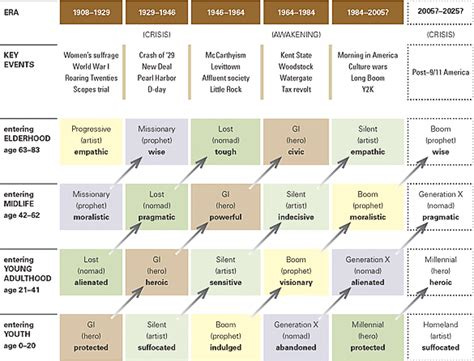
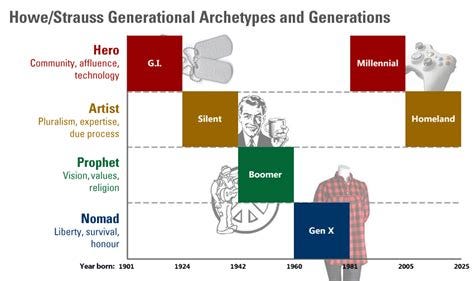
What are your thoughts?
Another Story With these Archetypes:
I discovered Generational Theory during one of many interruptions to writing the rough draft of Paradox. So the archetypal dynamics I just explored is largely missing from most of my books. But from the very start, I intentionally drew from Generational Theory in writing Threat Quotient—my first expansion into sequential art storytelling, and the realization of a die-hard childhood dream.
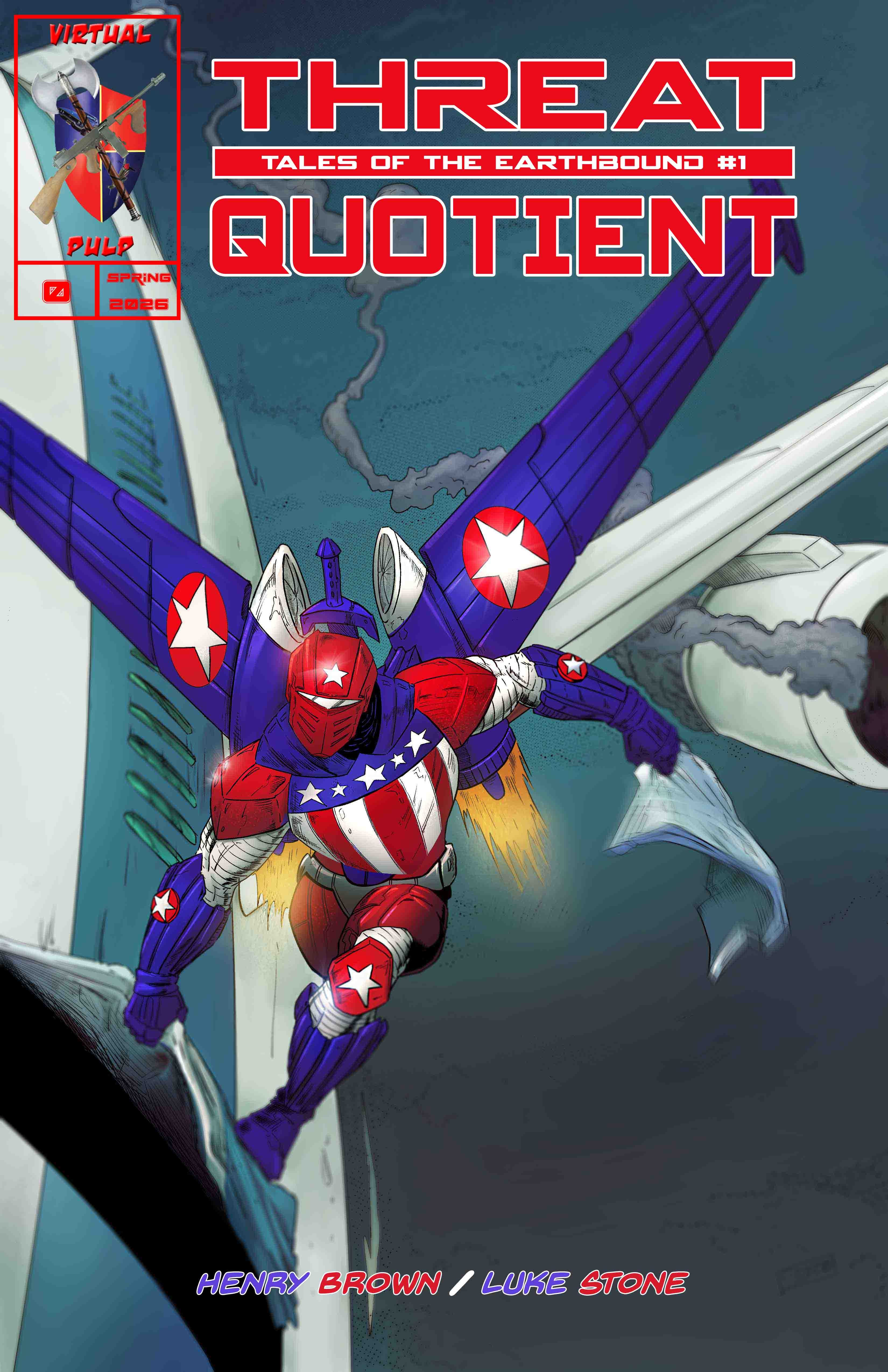
Tales of the Earthbound is a planned series of graphic novels set on an alternate reality with superheroes. Threat Quotient is the first in the series—a 108 page full-color ensemble superhero epic designed to treat readers to all the thrills and dopamine hits fictional stories have elicited since time immemorial.
The Kickstarter campaign is scheduled to begin 1n April, and you can sign up to be notified upon launch right now. I officially invite you to join the adventure.
Marvelous! Also, apparently Lucas came by his new age viewpoint honestly due to his NDE, and not just because it was trendy.
Excellent work in detailing the generational archetypes in film, SW in particular.
As you mentioned, it is highly unlikely Lucas had any intellectual notion of the generational types, but since he went to film school (as did I) he was no doubt steeped in film tropes. You correctly mention several that he may well have drawn from.
As a Boomer and film guy, I am sure Han Solo is Rick Blaine from Casablanca given a "co-staring" role rather than the lead. I could also make a good case for Randolph Scott as Luke and Joel McCrea, as Han from the film RIDE THE HIGH COUNTRY (character wise, not plot). Lastly, I would not be shocked to find Lucas drew elements from THEY WERE EXPENDABLE since it has a vast cast and a plot with "desperate, out-gunned" heroes.
Other than American Graffiti, Lucas "borrowed" a lot. His big student film and first Hollywood film, THX was close to an out-right steal from Ayn Rand.
Sorry to take such a long sideroad into films - Your explanations of Straus & Howe's work is exemplary.