
Generational Storytelling VII
The Nomad Archetype

“Whatever.”
“The beatings will continue until morale improves.”
Life sucks; then you die.”
As I explained in previous articles in this series, I began writing the script for Threat Quotient after I had discovered Generational Theory and was borderline obsessed about it. Having seen the truth in GT, there was no doubt it was going to influence my writing going forward. And for my superhero graphic novels, I was going to go beyond letting GT simply influence the story.
In researching the patterns of American History, Richard Strauss and Neil Howe found that every American generation conforms to one of four archetypes they defined. And they’re always born in the same sequence, just as the four “turnings” occur in the same sequence every saeculum (historical cycle). Since Tales of the Earthbound was to involve a clash of superheroes, I decided to give the American characters in my new pantheon personalities which reflect the respective peer personalities of the archetypes recognized by Strauss and Howe…but have them all together in their prime years. That would require some time travel—which is why Threat Quotient begins with introducing my concept of a multiverse.
In that simplified explanation above, I glossed over some details. It wasn’t so much that I built the characters to conform to the archetypes—I already had a well-developed concept of these characters. I simply determined what archetypes they already fit based on the personalities I had conceived for them, then fleshed them out more thoroughly based on what I had learned about the archetypes.
Most of you need no introduction to the 13th Generation, or “Generation X.” Even though the native-born Americans who entered the world between 1961 and 1981 (the birth span observed by Strauss and Howe, categorized as such because of the distinct peer personality of Americans born in those years) comprise a very small generation, I would guess maybe half or more of my readers are of that demographic. But I will point out some common experience, shared attitudes and behaviors for those who haven’t given us, collectively, much thought.
As usual, I will be speaking in generalities. I know exceptions exist, but it is the trends and commonalities which are useful for my purposes.
Let’s start with the name. Originally, Strauss and Howe named us “the 13th Generation” simply by counting how many American generations there were so far, back when they were researching historical patterns for their first book on the subject. I forgot who it was, but somebody called us “Generation X” and that name stuck. Boomers liked the name because it distinguished how unimportant we were compared to them. We were Brand X. We were struggling to find our “identity.” We didn’t have their advanced “consciousness;” we didn’t have a Vietnam to protest; didn’t have anything to virtue-signal about, at all. We just were not and could never be as groovy as they were.
I sometimes find it helpful to imagine the 13th as divided into two cohorts: those born to Silent parents, and those born to Boomers. The latter cohort was largely preempted from existence by the birth control pill and the abortion industry. The former cohort was born as part of the fading postwar habit of building nuclear families; then enthusiasm for raising children waned quickly and the family, such as it was, disintegrated during divorce. But whether we survived the pill and Sanger’s Eugenic Vacuum, or merely buyer’s remorse from our regretful parents, it all panned out pretty much the same.
X is the middle child of the living generational family. We’re seen as “the bad kids,” as all Nomads are. Whereas the G.I.s, Silent, Boomers, Millennials and Homelanders, as children, were/are viewed as precious gifts, we were seen as a burden and a nuisance. Our parents were trying to “find themselves” and party hardy. Children got in the way of that.
There were no high expectations for us. As children, we lived down to those expectations. We were emotionally abandoned and in many cases, physically abandoned. Our typical experience is somewhere between neglect and abuse. In large families, the contrast in treatment between X and Boomer or Millennial siblings is palpable.
The attitude is reflected in pop culture, too. When X came along, there was an explosion of Evil Child Narratives in movies and TV. There was Rosemary’s Baby, It’s Alive, the Omen, and Evil Child plots on episodes of Twilight Zone and Star Trek. The Evil Child trend in stories was likely a subconscious justification for how we were treated—similar to how Boomer filmmakers weave so many narratives to convince us that their fathers were all unfaithful tyrannical wife-beating serial killers, during the Dark Ages of the “Red Scare” years.
Evil Child movies suddenly lost popularity as X came of age and the Millennials took our place, demographically. Audiences now poured into theaters to watch gushing feel-good movies like Raising Arizona, Look Who’s Talking, Baby Boom, and Three Men & a Baby. When the earliest Millennial cohorts grew into adolescents you got Home Alone, which basically appropriated the common experience of X and transposed it to generate sympathy for a Millennial character. Once our childhood was over, children became recognized as a blessed gift, once again.
We were the most violent, hyper-competitive risk-takers in the generational family. Who were we competitive with? Who did we direct our violence toward? Each other. We’ve never seen ourselves as members of a group, as the other generations have—much less felt loyalty or kinship with our contemporaries. We were outcasts from the beginning; often pariahs in our own families even before we became the hellraisers we were infamous for being. We took our aggression out on others going through the same trials as we were.
We learned to look out for Number One. That meant we typically don’t unite with anyone to accomplish anything. It doesn’t occur to us to ask for help; nor do we spontaneously offer to help others, outside of our close friends and our own children.
Had you asked one of us growing up whether ignorance or apathy was our biggest dysfunction, we probably would have answered, “I don’t know and I don’t care.”
We are survivors…or survivalists, if you prefer. Alienated loners who were confused or saddened by our isolation as young kids, but who eventually came to prefer isolation. The term “latchkey kid” entered the American lexicon because of our typical lifestyle as children.
We had a reputation as slackers and, from age 13-18, we deserved it. But as rising adults in a world where jobs were being outsourced overseas by the millions and employers saw us as disposable, we worked harder than anybody and learned to survive in an economy increasingly designed to make the rich richer but us poorer.
It was never our turn. The 13th Generation didn’t get a turn. When we were kids, society catered to the young adults. When we became young adults, society resumed catering to children.
The Boomers enjoyed “free love” and “if it feels good, do it.” They also left us a nice little consolation prize once it was “our turn” to sow wild oats: AIDS.
Boomers experimented with recreational drugs with very little societal consequences—LSD was legal until 1966, and drug use didn’t lock them out of military service or good civilian jobs. X not only got locked out of good jobs and military service for drug use, but millions went to jail for smoking weed. Along come the Millennials and weed is legalized. In fact, they could then even become dealers, free of harassment from the Man as dispensaries popped up everywhere.
And after paying into Social Security all our adult lives, guess what else is gonna be nothing but dust in the wind once it’s “our turn”? But don’t worry, Millennials: if there’s still a USA on the other side of this Crisis, and the pattern holds, you’ll get a new entitlement package and be financially well taken-care of right up until death. And so will the Homelanders, and the next Prophet Generation. But the next Nomad generation will be left holding that bag.
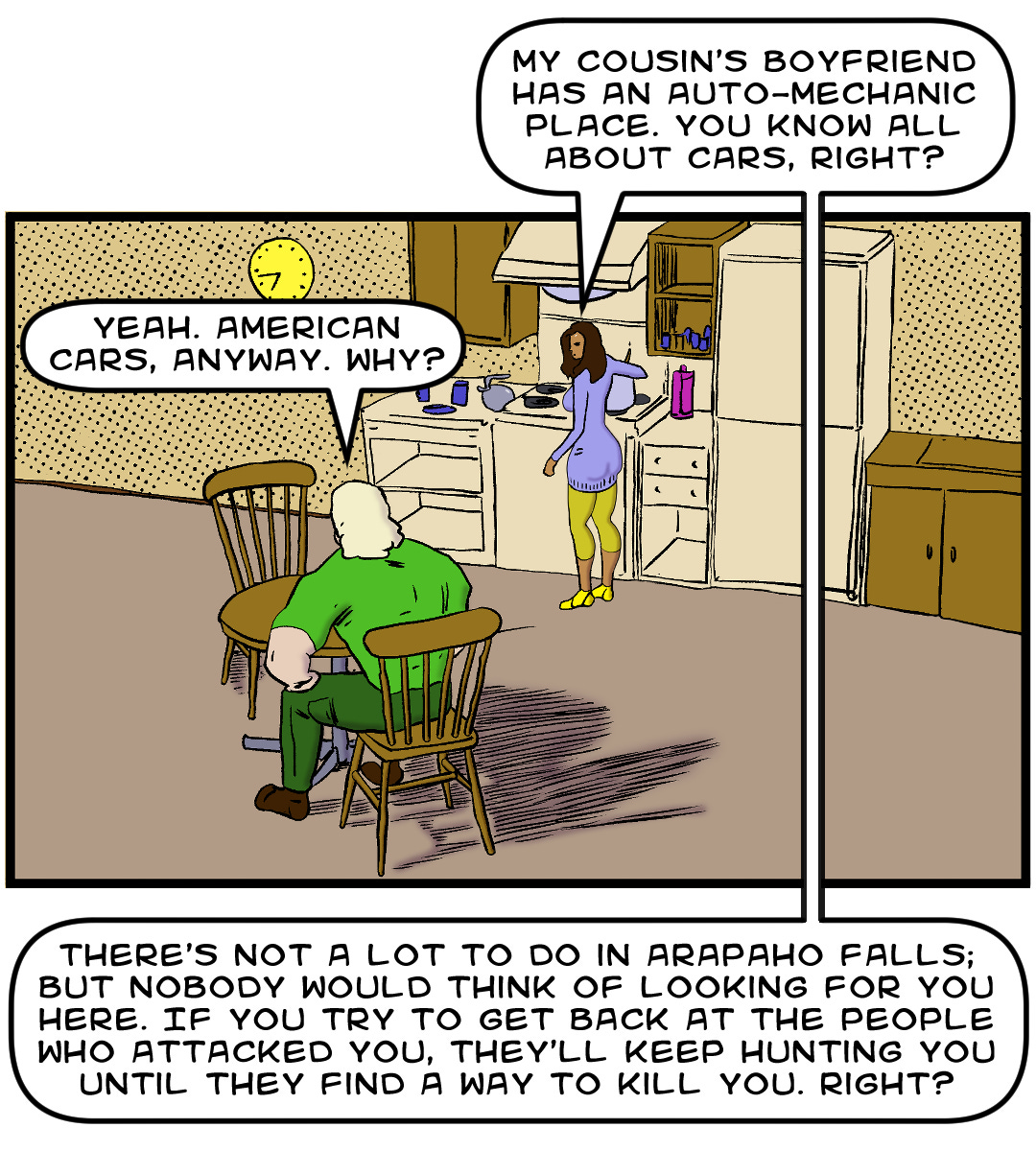
“Life sucks; then you die,” is what we reminded each other, and ourselves, frequently. Generations before and after us see that as unbearably cynical and pessimistic, but it was what the world taught us.
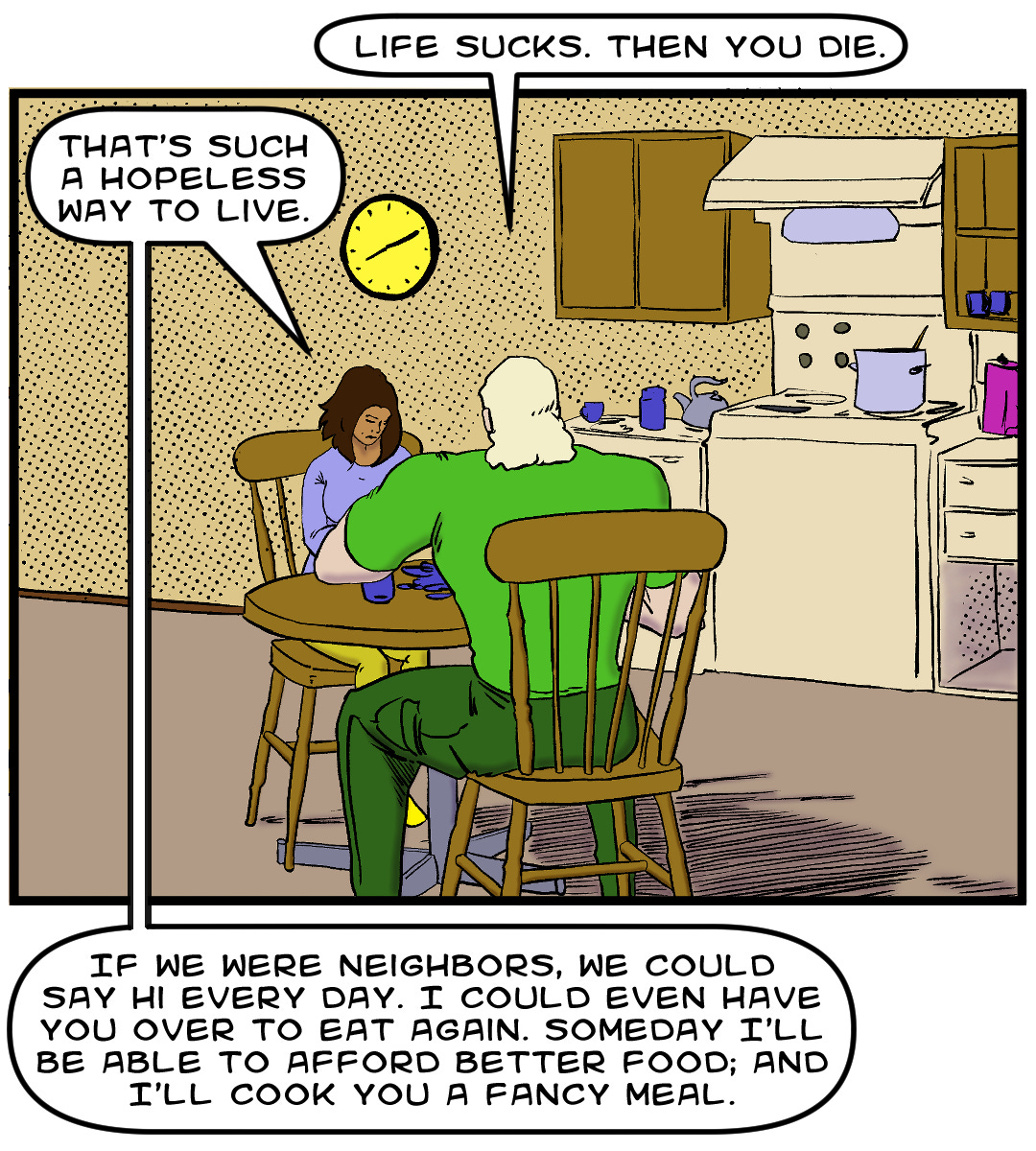
The average Boomer tended toward narcissism: “Nothing and nobody is as important as me.” X’s problem was nihilism: “Nothing and nobody is important—including me.” I see many complaints about nihilism in our culture. Can’t blame that one on the Boomers, people. That’s on us.
Whereas the Boomers attended college on an unprecedented scale, we were the most highly incarcerated per capita. All those new prisons being built in the ‘90s were for us.
There was a time when self-styled rebels held up individualism as a virtue. Then we came along and gave the world more individualism than it could handle. We, also, now recognize that an independent spirit can be destructive when taken to extremes…and yet we find it extremely difficult to curb it. Our lone wolf mindset and hyper-competitive disposition makes it almost impossible for us to work together even when it would be in our best interest to do so.
You get the picture. The good news is: most of us were reformed by having kids of our own.
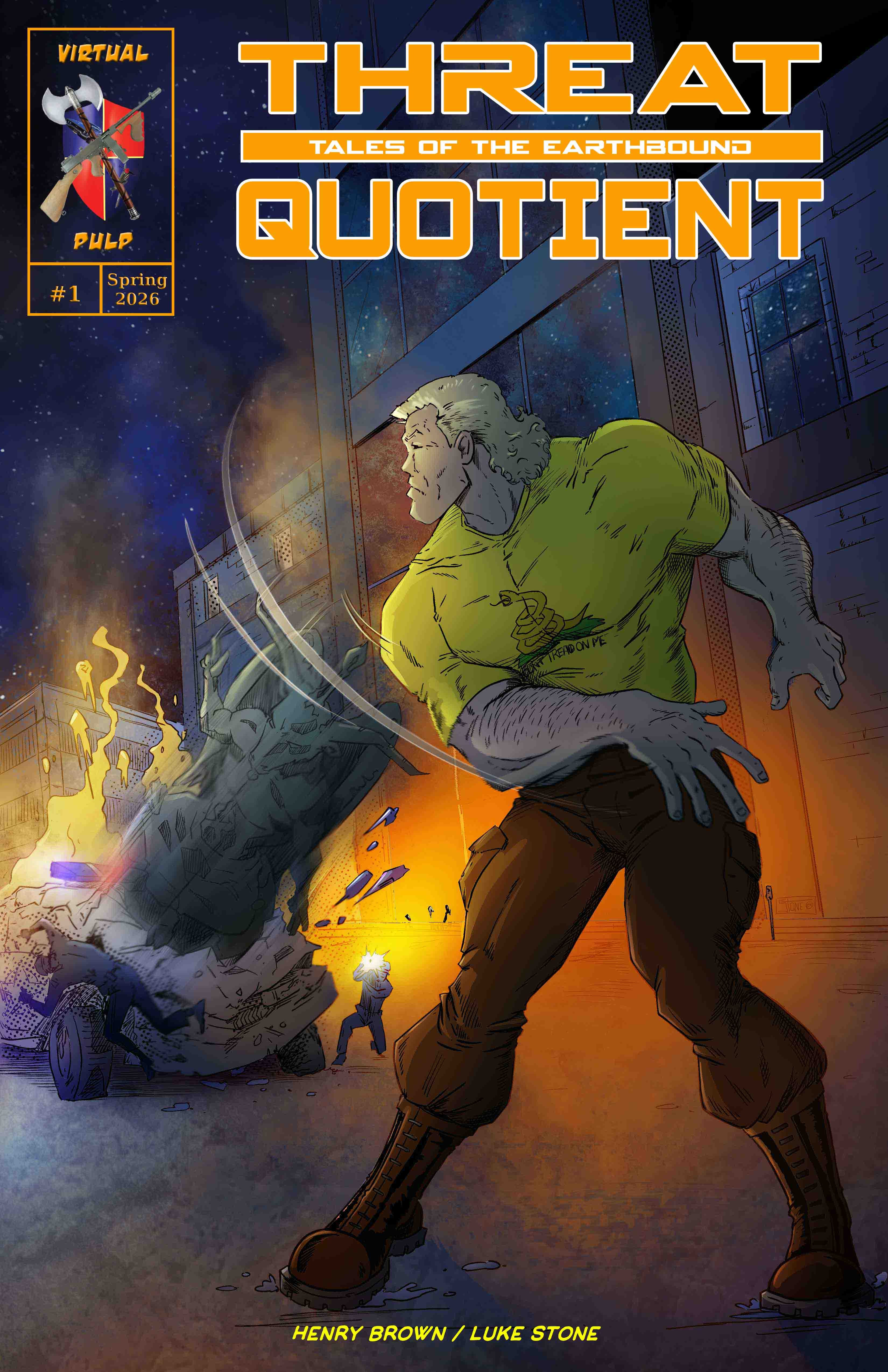
I had been nurturing some character concepts in my imagination for decades. One was a destroyer. A literal juggernaut. An antihero who not only whupped up on bad guys, but brought smoke on the corrupt world order itself in nigh-anarchist rampages. A character it would be great fun to write, but who would no doubt terrify people in real life. Or at least make them very uncomfortable.
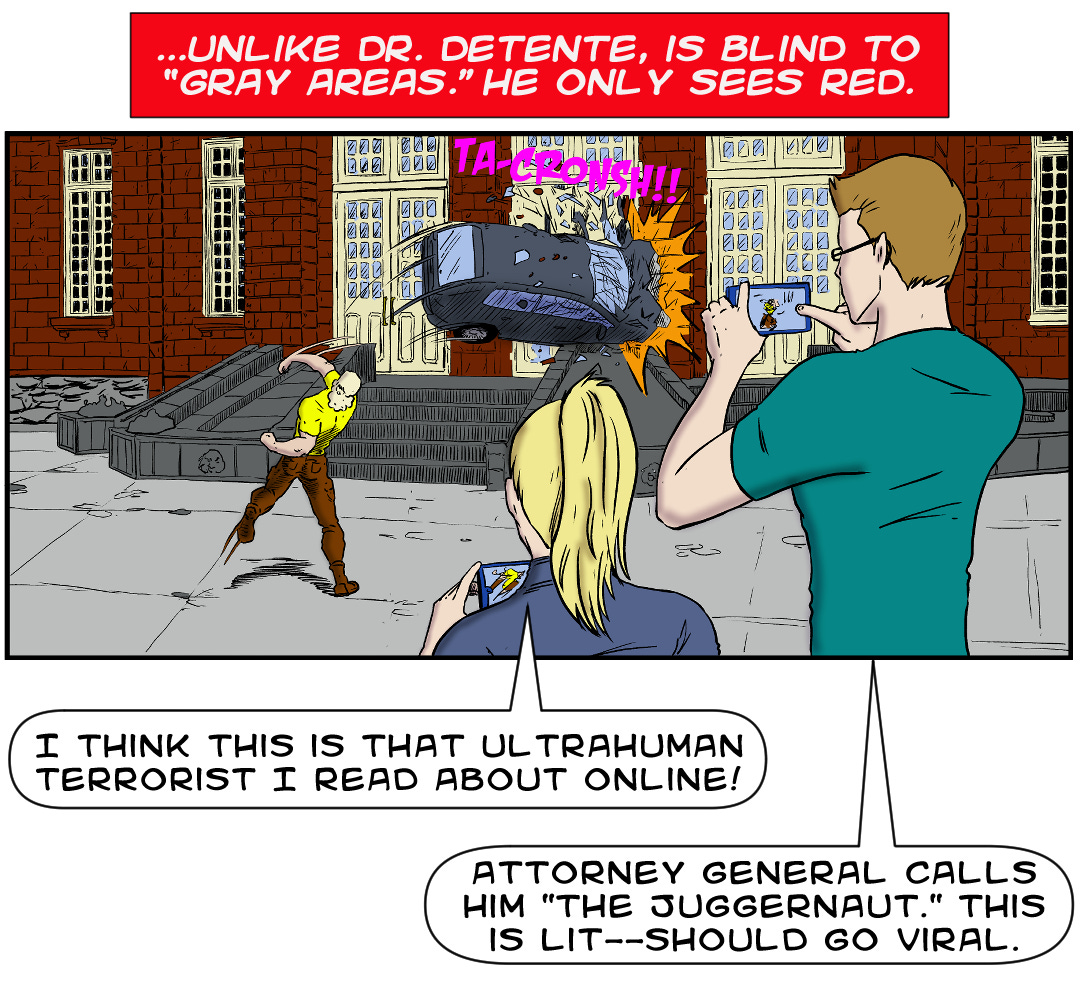
A problematic character, to define him in modern parlance.
He would not make him an alien from another planet, or endowed by magic, or radiation, or chemicals. I would make his “origin story” parallel that of Samson, the Danite judge of the Old Testament. Like Samson, he’s a bad boy who loses his way. His life would diverge from the Biblical figure considerably, and I wouldn’t overtly bind the secret of his great strength to a Nazerite vow, but I would wink at the savvy reader now and then by having various other characters advise him to get a haircut.
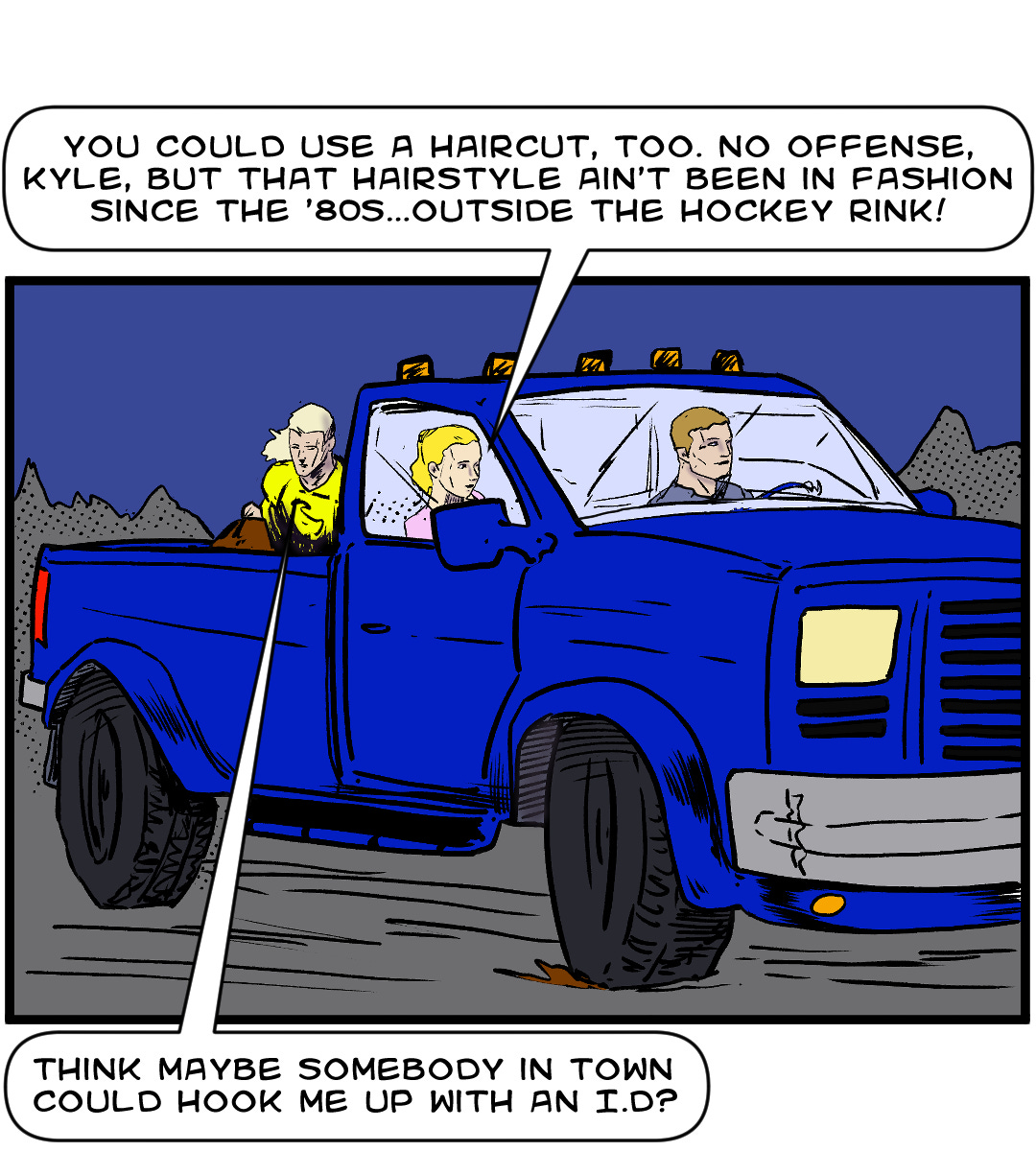
After learning about Generational Theory, it was just drop-dead obvious to me that the Juggernaut is Nomad Archetype to his core. And since I know a whole lot more about X’s experience than the Lost, Gilded, or Liberty Generation’s, he would be a 13er. Divorced parents/broken home. Hockey hair, loud, neon colors, and never dresses more formal than a T-shirt. Listens to Punk Rock, New Wave, Techno and Hair Metal.
The cosmic quake swallows him from 1986 and spits him out into the Covidiocy years. To emphasize what an alienated loner he is, I had the dimensional portal drop him into Mexico, where he doesn’t speak the language, and becomes a target of cartel muscle. He has to fight through them, and corrupt Federales, to get back to the border. Then he hitchhikes back to his hometown…to find out that he was never born in this alternate reality, and his friends don’t know him.
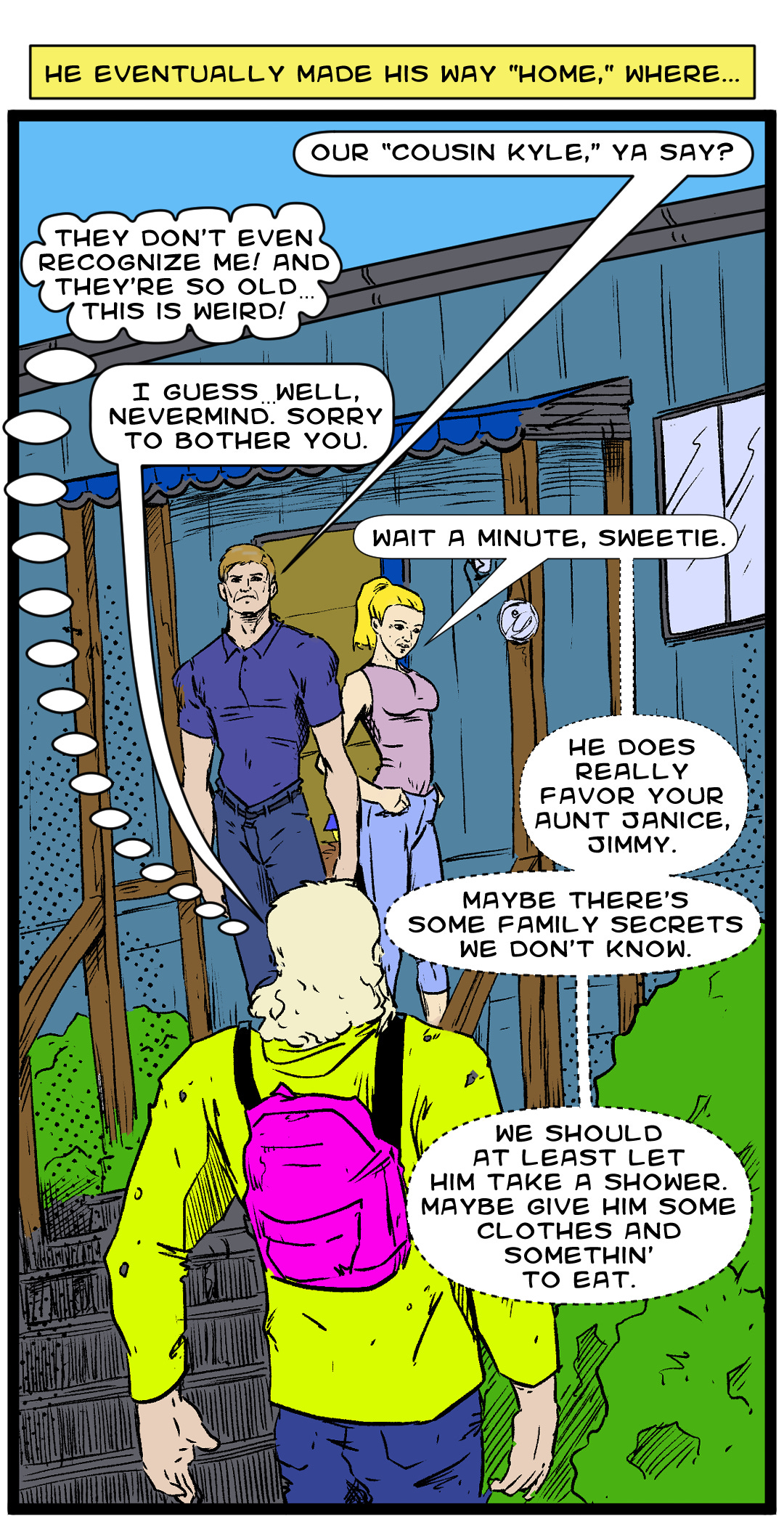
None of us 13ers ever went through that specific ordeal, but were alienated loners all the same. That little Mexican detour is mostly for the benefit of readers who don’t understand Gen X and need help via creative license to understand why we are the way we are. It also, hopefully, helps explain why his desire is to just be left alone. That’s not necessarily a generational trait, but a rural American one.

Like rural Americans in general, the Juggernaut is not political or ideological. He becomes an enemy of the State because the State is a bully and pushes him too far. I chose the Gadsen emblem for his “costume” not because he necessarily knows anything or cares about America’s war of Independence, but because it so accurately reflects his, and the average rural American’s, attitude and temperament. I expound on this choice at some length in Ulysses’ interview of me over at Comics Odyssey.

There is one more 13th Generation hero in Tales of the Earthbound, but he differs from the Juggernaut in a few important ways:
He has no superpowers.
He didn’t time-warp into this reality from his youth—he is in middle age.
He is a father.
Remember when I mentioned that a lot of 13ers were somewhat reformed when we had kids of our own? That’s Caleb Spectre, the patriarch of Phantom Force. His four sons are the ninja hackers he trained for his war on the Cabal and its Orwellian fake news apparatus. Three of them are Millennials with one Homelander, so they are excellent team players, and loyal followers. But sometimes their father’s fatalism frustrates the firstborn.
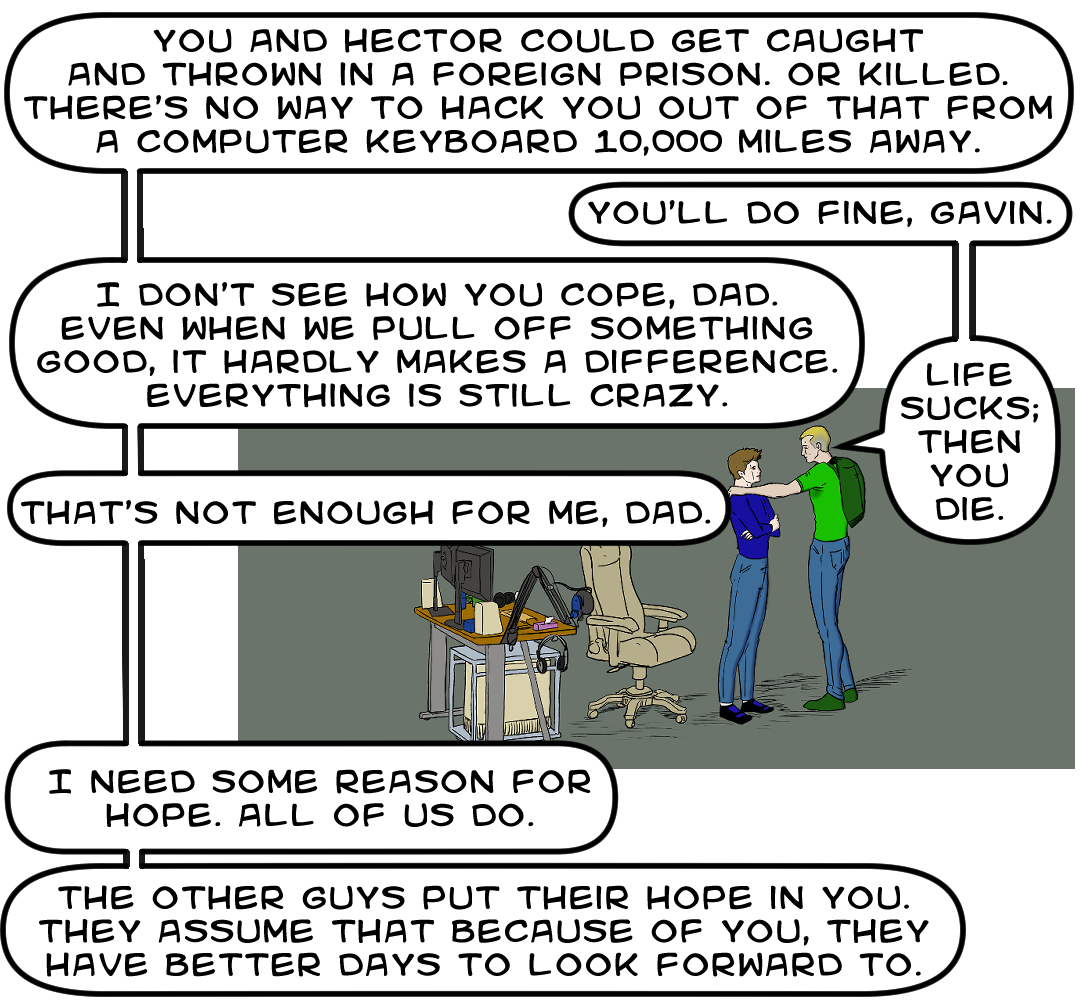
Even though he is late cohort X while Juggernaut is early/mid cohort both had the sort of formative and adolescent experience I described in this article. But Phantom Leader has overcome much of his childhood baggage via consistent efforts to forge a family of his own, and give his sons the benefit of wise guidance and loyalty that he never got from his own father.
However, he’s not a warm fuzzy sort of parent. He is more like the Lost Generation senior NCOs and field grade officers leading their young G.I. soldiers into action in the European and Pacific theaters (think of George S. Patton’s opening monologue from his eponymous biopic: “We’re gonna rip the guts out of those lousy Hun bastards and use them to grease the tread of our tanks!”) He is willing to get his own hands dirty, and rise to the level of brutality that the situation requires.
BTW, there was one exceptional saeculum when the Crisis came too quickly, there wasn’t time for a Hero generation to come of age, and the Nomads had to resolve the 4th Turning. Any guesses when that was?
The Threat Quotient Kickstarter launches on April 28.

If you would like an alternative to mainstream entertainment, support the creators providing it. Go sign up now on the pre-launch page.
Interesting stuff. I do think it is as you pointed out, a more specifically American theory. Seems less applicable outside the US.
But I see X’s story is a bit like Job’s, getting hit on all sides. Their test is whether they will curse God or not.
Civil War
The ONLY time there was NOT a full compliment of gens 1,2,3,4.
The EXCEPTION TO THE RULE as Strauss and Howe called it.
I enjoy your discussions of this theory and how you apply it to your creative work. You might need some review on occasion concerning Boomer experience and ideology vs Gen X.
"Life is short, and then you die" was very common when I was a Boomer teenager in the early sixties.
I'm not sure all of society failed Gen X, but I do believe the education system did. By the time Xers were in primary and secondary school, the pre-boomer teachers had drifted left, while Boomers that went into teaching were usually from the idealistically, silly America-is-the-problem group.
Keep up your work. If you use a Boomer villain, the best archetype would be a woman, who believes she is absolutely right and never sees the tyranny of her methods.