
Indie Authors: Escape from the Goolag
How Can We Escape the Clutches of Tech Oligarchs?

All around us are portents that the “end of the Internet” is nigh and if independent creators thought the book biz was rough before, it’s about to get Medieval on us now.

Recently I shared that I am in the process of building my own platform. So far it’s just got episodes of my graphic novel there, but hopefully before Christmas it will also have a store where you can buy e-books directly from Virtual Pulp Press.
Some fellow authors are also building their own platforms. The burning question, though, is how will readers find our platforms when Goolag and its clones are already hellbent on hiding all content that isn’t Globohomo-aligned? And soon it will only be giving A.I. summaries of what the Thought Police want you to know about, instead of actual search results you can click on to go to the source.
An indie author aggregator is needed, and some folks have built just such sites, only to see them gather cyberdust and quickly sink into obscurity—initially visited by platoons of authors thirsty to have their books discovered, but never visited by readers thirsty for books. However readers find books to read, that wasn’t it. I’ve speculated about possible reasons, and maybe there are a dozen more that haven’t occurred to me.
Peter Simeti recently tweeted that he will build such an aggregator for indie comic creators. Maybe because of his following, combined with the impending extinction-level flood of A.I. literary sewage, it will catch on. It would be nice , in that case, if my new platform is included in the aggregation, but who knows who he will include and why. My work has been snubbed many times, and I’m not the only creator in that club.
Prose authors are facing an even bleaker future. It’s gonna take something YUGE to convince Joe Reader to shop for books anywhere but Amazon, and frankly, I’m not sure an infinite glut of slop will do it. Nevertheless, like I said last time, we have to try, anyway, if we want even our existing fans to find our future work.
’s Based Book Sale is an increasingly successful aggregation that occurs quarterly, now with spinoff sales. This has attracted non-woke people and some have found my books this way. But it’s a free-or-99 cent sale, so it can’t be a year-round aggregation. At least not for authors who want to be compensated for their work. I don’t know what the ratio of readers to authors is. And it’s a list of links to AmazingCon and other corporate platforms. What can be done in between the sales for indie platforms selling e-books directly?I loved the Web before Goolag, and had few complaints about being able to find stuff, even though the online world was tiny compared to now. Back then there were associations called “webrings” where sites with related content were all linked to each other and if a web surfer found one such site, there was a good chance he would find the others. Maybe something like that would help.
At the very least, indie authors with platforms should back-link to each others’ sites. I don’t know how much of that will happen, or how effective it will be.
Before webrings or backlinks can have any effect at all, a website so connected would have to be discovered by readers shopping for books in the first place.
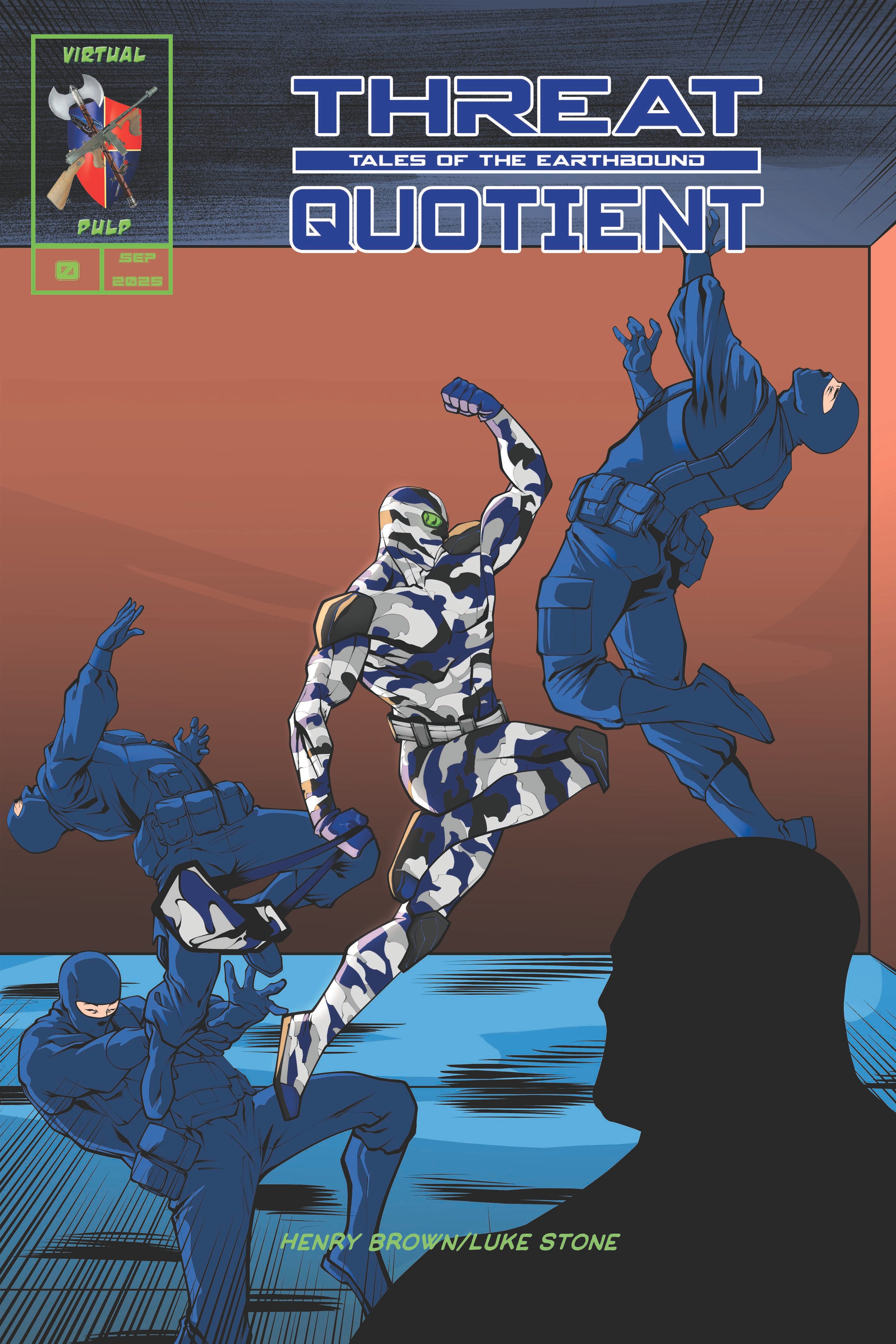
If you like comics, visit Virtual Pulp Press, where I’m posting episodes of my new ensemble superhero graphic novel, Threat Quotient. I plan to launch a campaign for the print version in the spring, but you can read it digitally for free now.
Maybe a 'based book' website that has permanent links to author's stores instead or as well as amazon. People with their own page would rank higher in search results.
Possible names:
Indiezon
Indie Book Page
Books Books Books
Brian Neimeier blogs about this quite a bit. His model is Neopatronage, where readers find and support you on kickstarter or the patreon alternatives. It's not perfect, of course, but it helps get around the search engine/Amazon problem.